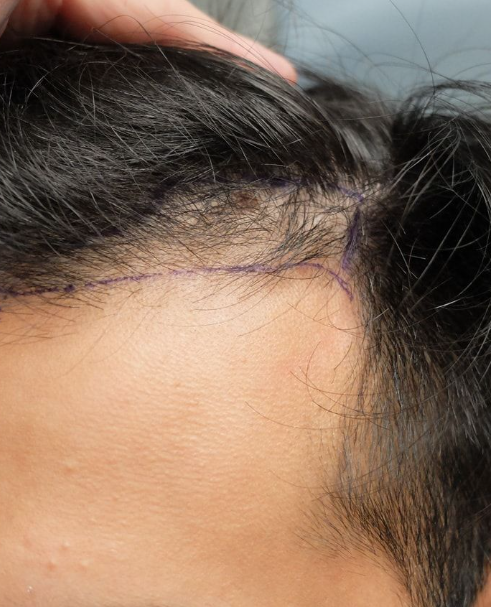
Hairline Recession & Hairline Restoration
with FUE Hair Transplant
BLOG

Hairline Recession & Hairline Restoration with FUE Hair Transplant
Hairline recession is often the earliest and most noticeable sign of male pattern baldness. It can significantly affect facial appearance and self-confidence, even when overall hair density seems adequate. At Reniu Aesthetic & Clinic, hairline recession is treated with precision-planned FUE hair transplant to restore a natural, age-appropriate hairline.
What Is Hairline Recession?
Hairline recession occurs when hair follicles at the frontal scalp and temples gradually weaken and stop producing healthy hair. This typically leads to an “M-shaped” hairline and thinning at the temples.
If treated early, further progression can be controlled. However, once follicles become inactive, surgical hair restoration is required for visible improvement.
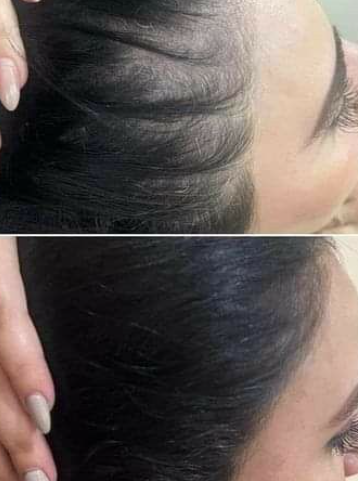
How Do You Know If You Have Hairline Recession?
Common signs include:
• Gradual backward movement of the frontal hairline
• Thinning hair at the temples
• Formation of an M-shaped hairline
• Increased hair fall around the forehead
• Family history of early baldness
Hairline recession often begins subtly and worsens over time if left untreated.
Why Does Hairline Recession Happen?
Hairline recession is primarily caused by:
• Genetic predisposition
• Sensitivity of hair follicles to DHT
• Hormonal changes
• Stress and lifestyle factors
• Smoking and poor nutrition
Early identification plays a crucial role in treatment success.
⸻
How Is Hairline Recession Treated?
Treatment depends on the severity of recession:
• Early stages: Medical management, PRP therapy
• Established recession: FUE hair transplant for hairline reconstruction
Hairline transplant focuses on restoring a natural shape, density, and direction to maintain facial harmony.
⸻
Recovery & Results
• Healing period: 7–10 days
• Temporary shedding: 2–6 weeks
• New hair growth: 3–4 months
• Visible hairline improvement: 6–9 months
• Final results: 12 months
⸻
Got Questions?
Frequently Asked Questions
Is hairline transplant permanent?
Yes, transplanted hair is long-lasting and resistant to DHT.
Will the hairline look natural?
Yes, when planned carefully with proper angle and density.
Medical Evaluation & Tests Performed
Before planning hairline reconstruction, a detailed evaluation is done.
Clinical assessment includes:
• Hairline mapping
• Density analysis
• Donor area evaluation
• Facial proportion assessment
Tests Performed:
• Complete Blood Count (CBC)
• Random Blood Sugar (RBS)
• Liver Function Test (LFT)
• PT / INR
• HIV
• HBsAg
• Anti-HCV
Why Hairline Design Is Important
Types of Hairline Restoration Treatments
Lifestyle Factors Affecting Hairline Loss
Post-Treatment Care & Do’s / Don’ts
Case Study